

Table of Contents
- What Size Inclusive Clothing Actually Means
- How to Read Clothing Size Charts Accurately
- Understanding What Is Vanity Sizing in Clothing
- Key Indicators That a Brand Offers True Size Inclusivity
- Plus Size African Print Dresses and Finding Your Fit
- Verification Steps Before You Purchase
- Red Flags: What to Avoid When Shopping
- Frequently Asked Questions
Last Updated: 28 September 2026
What Size Inclusive Clothing Actually Means
Size inclusive clothing refers to garments designed and manufactured across many sizes, typically from XS or size 6 through to 3XL, 4XL, or beyond. It means the brand doesn't just extend one or two sizes, it commits to offering genuine fit and quality across the entire spectrum.
The key distinction is this: size inclusive brands design for all bodies from the ground up, not as an afterthought. They adjust patterns, seams, and proportions for different sizes rather than simply scaling a single pattern up or down.
At Afroleisurewear, we understand that true size inclusivity goes beyond offering multiple sizes. It's about ensuring every customer feels confident and comfortable. Our Ankara print leisurewear is crafted with this philosophy, celebrating African heritage across body types.
Many brands claim size inclusivity but deliver vanity sizing or poor fit quality at larger sizes. That's why learning to verify genuine size inclusivity matters before you spend your money.
How to Read Clothing Size Charts Accurately
The first step in verifying size inclusive clothing is understanding how to read a size chart properly. Size charts are your most reliable tool for predicting fit.
Look for charts that include actual measurements in centimetres. A proper size chart lists:
- Bust or chest width
- Waist measurement
- Hip measurement
- Length from shoulder to hem
- Sleeve length (for tops)
Measure yourself with a soft tape measure. Wear the type of undergarments you'll wear with the garment. Measure loosely, don't pull the tape tight. Compare your measurements directly to the chart, not to the size number.
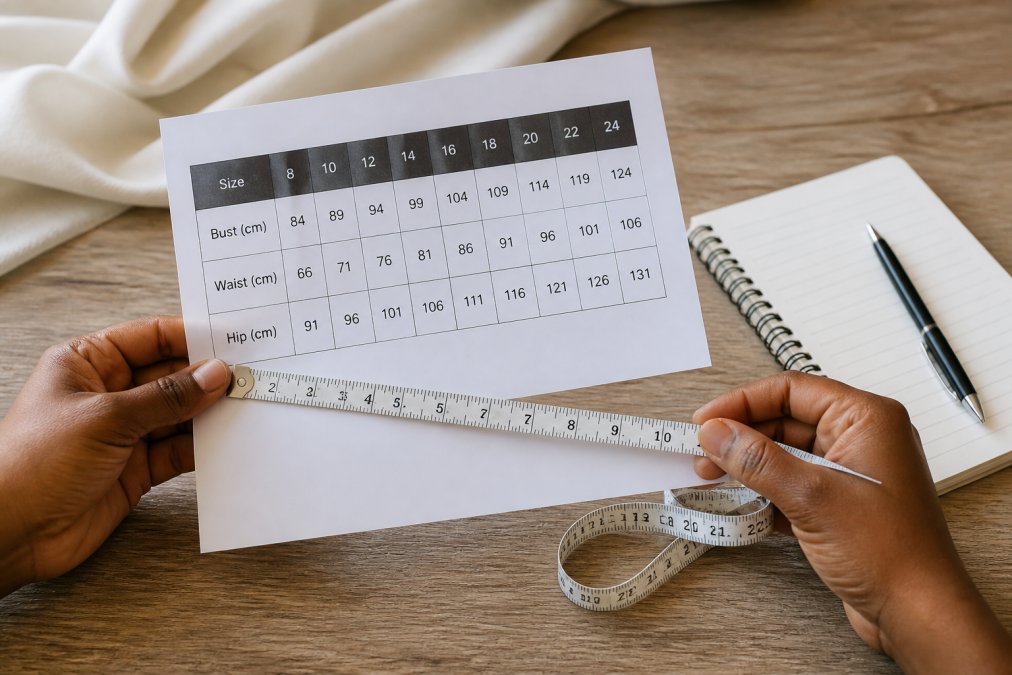
The VGC Sleeveless Hoodie Set, for example, provides detailed measurements for each size, half chest width from 49cm to 65cm, and body length from 67cm to 79cm.

Beware of charts that only list size numbers without measurements. These are red flags. A size 14 at one brand might be completely different from a size 14 elsewhere.
Check whether the chart specifies how the garment should fit, is it meant to be fitted, relaxed, or oversized? This context changes how you interpret the numbers.
Understanding What Is Vanity Sizing in Clothing
Vanity sizing is the practice of labelling garments with smaller size numbers than they actually measure. A dress labelled size 12 might have the measurements of a traditional size 14 or 16.
Brands use vanity sizing to make customers feel better about their size. It's marketing dressed up as fit. The problem is that vanity sizing makes size charts unreliable and confuses shoppers.
What is vanity sizing in clothing, exactly? It's dishonesty about fit. When every brand does it differently, size numbers become meaningless. You can't trust the label, you have to trust the measurements.
Size inclusive brands typically avoid vanity sizing because they're designing for genuine fit across all sizes. Vanity sizing works against inclusivity. It creates the illusion of fit rather than actual fit.
To spot vanity sizing, compare a brand's size chart to its customer reviews. If customers consistently say "I sized down" or "I sized up," that's a sign the labelling doesn't match reality.
Key Indicators That a Brand Offers True Size Inclusivity
Several concrete signals separate genuinely size inclusive brands from those just claiming to be.
Detailed size ranges. Brands offering true size inclusivity stock sizes from XS through 3XL or 4XL minimum. Many go further. Check the product page, if only a handful of sizes are available, that's not inclusive.
Consistent measurements across sizes. In a truly size inclusive brand, the proportions make sense. The bust-to-length ratio should feel balanced whether you're a size 8 or size 24. Vanity sizing brands often have odd proportions at larger sizes because they're just scaling up a single pattern.
Customer reviews across sizes. Read reviews from people wearing different sizes. Do size 8 customers and size 20 customers both report good fit? That's a sign. If only small-size reviews mention fit quality, the brand likely isn't investing equally across the range.
Transparent fit descriptions. Brands that care about inclusivity explain how each piece fits. "Relaxed fit," "oversized," "tailored", these words tell you what to expect. Vague descriptions suggest the brand hasn't thought through fit carefully.
Price consistency. Some brands charge more for larger sizes. That's not inclusive, it's penalising customers for their size. Genuinely size inclusive brands charge the same price across the range.
Our Unisex Ankara Crepe Two-Piece Set is designed with these principles. The relaxed long-sleeve top and flowy wide-leg trousers work across multiple sizes.

Plus Size African Print Dresses and Finding Your Fit
Finding plus size African print dresses that actually fit well is challenging. Many brands offer the sizes but not the fit quality.
When shopping for plus size African print dresses, focus on these specifics:
- Structured fabrics. Lightweight crepe or cotton blends hold their shape better than flimsy materials. Check the fabric content in the product description.
- Seam placement. Seams should follow the body's natural lines, not cut across awkwardly. This requires thoughtful pattern-making, not just scaling.
- Length options. A knee-length dress that fits well at size 12 might hit mid-thigh at size 20 if the brand hasn't adjusted lengths. Good brands do.
- Waist definition. Plus size dresses often go straight down, which isn't flattering. Look for pieces with some waist shaping or adjustable elements like drawstrings.
The LTS Red Ankara Wide-Leg Trousers demonstrate proper plus size design. The fully elasticated waistband and adjustable drawstring give you control over the fit. The wide-leg silhouette works across sizes.
LTS Red Ankara Wide-Leg Trousers | Plus →
Read reviews specifically from plus size customers. What do they say about the length, the waist fit, and whether the fabric holds up after washing?
Verification Steps Before You Purchase
Follow this process to verify size inclusive clothing before spending your money.
Step 1: Check the size range. Does the brand offer at least 6-8 sizes? Ideally more. If sizes jump from 12 to 18 with nothing in between, that's not inclusive.
Step 2: Get your measurements. Measure your bust, waist, hips, and the length you need. Write these down.
Step 3: Find the size chart. Look for a detailed chart with actual measurements in centimetres. If the brand only lists size numbers, move on.
Step 4: Match your measurements to the chart. Don't rely on your usual size. Find the row where your measurements fit comfortably (with a little room for movement).
Step 5: Read reviews from your size. Search for reviews from customers who wear the same size you're considering. What do they say about fit, length, and quality?
Step 6: Check the return policy. A truly confident brand with good sizing has a generous return window. If returns are difficult or expensive, the brand isn't confident in its fit.
Step 7: Look at product photos. Request photos showing the garment on different body types. Some brands provide these. It's a sign they're thinking about inclusivity.
The Unisex Ankara Trousers with Pockets comes with detailed size information and styling guidance. The brand provides measurements for Small, Medium, and Large, plus care instructions.

Red Flags: What to Avoid When Shopping
Certain patterns suggest a brand isn't genuinely committed to size inclusivity.
Limited size availability. If a piece is only available in sizes 8-16, that's not inclusive. True inclusivity means all sizes are in stock, not just the popular ones.
Vague sizing language. Phrases like "one size fits most" or "fits all" are warnings. Clothing doesn't fit all bodies the same way. Brands using this language haven't done the work.
No detailed measurements. If a size chart lists only size numbers or generic descriptions like "small, medium, large," you can't make an informed decision.
Inconsistent fit across the range. Read reviews carefully. If customers at different sizes report completely different experiences, the brand hasn't invested in proper sizing.
Cheap fabric at all sizes. Some brands use quality fabric for small sizes and switch to cheaper material for larger sizes. This is cost-cutting disguised as inclusivity.
No customer photos. Brands confident in their fit encourage customers to post photos. If you see no real-world photos of the garment, that's suspicious.
Aggressive upselling of size guides. Some brands push you toward their "size guide quiz" instead of providing straightforward measurements. Quizzes are marketing tools, not sizing tools.
Negative reviews about fit at larger sizes. If reviews consistently mention fit problems at plus sizes while small-size reviews are positive, the brand isn't truly inclusive.
Verifying size inclusive clothing takes a few minutes but saves you from wasted money and frustration.
Frequently Asked Questions
What does size-inclusive actually mean in the fashion industry?
Size-inclusive fashion means a brand offers a genuine range of sizes from XS through to XXL or beyond, with proportional grading that accounts for different body shapes. True size inclusivity goes beyond simply offering larger sizes, it means each size is designed with proper fit, not just scaled-up versions of smaller sizes. Afroleisurewear offers pieces designed for all body types, such as the VGC Sleeveless Hoodie Set available in S through XXL.
How can I tell if a brand offers genuine size inclusivity when shopping for plus size African print dresses?
Check whether the brand publishes full size charts with actual measurements in centimetres, not just letter sizes. Look for customer reviews that mention fit across different sizes, and see if the brand offers multiple width and length options. Genuine size-inclusive brands also feature diverse body types in their product imagery. When shopping for plus size African print pieces, verify that the garment is cut for your size group, not simply scaled up.
Why is it important to check size charts before buying clothing online?
Online shopping removes the ability to try items on before purchase, making size charts your most reliable reference tool. Brands vary significantly in how they grade sizes, and two 'Medium' items from different retailers can fit completely differently. A detailed size chart with chest width, length, and sleeve measurements lets you compare directly to garments you already own and know fit well. This is especially crucial when ordering from smaller or independent brands, where consistency may differ from high-street retailers.
Do brands use different measurements for plus-size clothing, and how does vanity sizing affect my choice?
Many brands do grade plus-size items differently, sometimes using smaller proportions at larger sizes, which is where vanity sizing comes in. Vanity sizing happens when a size label doesn't match actual measurements, for example, calling a garment a 'Medium' when it measures like a 'Large'. This misleads shoppers and makes size-inclusive verification harder. Always measure your own body and compare those numbers to the brand's size chart rather than relying on the label. Afroleisurewear publishes precise measurements so you can verify the fit matches your body, not just the label number.
0 comments